Loss of production
Draining a primary storage tank removes its capacity from the network, and puts the facility at risk through shutdown and start-up.
Robotic systems for industrial maintenance companies
One submersible platform inspects, maps, cleans and measures the floor of a storage tank while the tank stays full and in service. Your crew operates it. Your customer never loses capacity.
Operating Paragonix Tek systems
The operating model
We build the robotic systems, train your operators and support the equipment for its working life. The relationship with the asset owner stays yours.
How the partnership works →One robot, multiple functions
The platform is a tool carrier. Access opening, sediment depth, product and hazardous-area requirements determine how it is configured — but it remains one machine, one crew and one mobilisation.
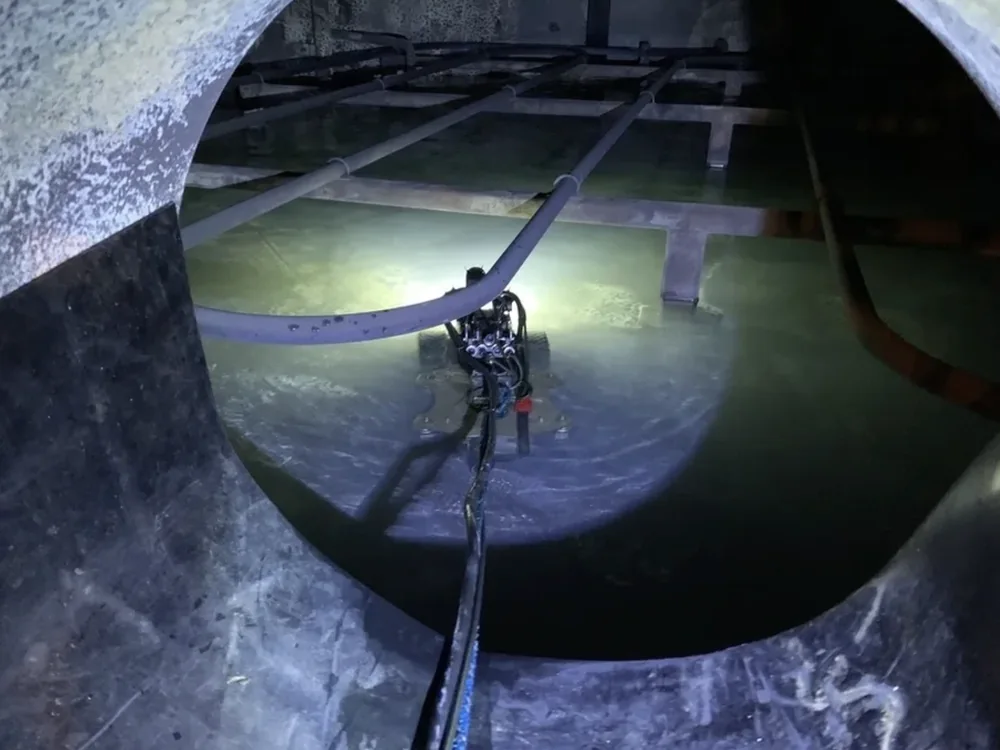 01
01 High-resolution visual survey of the floor, walls, columns and internal fittings, recorded as you go. Anomalies are logged where they are found.
Image here
Stephen, choose the image here and send to Jani
Acoustic survey of the sediment before you commit to a scope, so the depth and distribution are known rather than estimated.
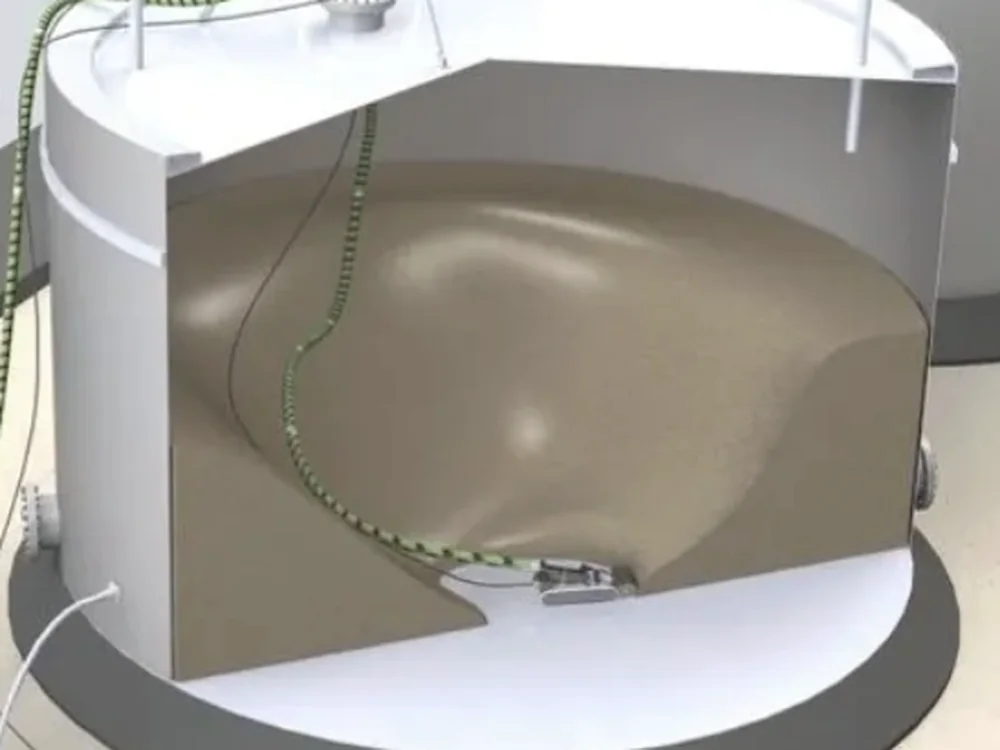 03
03 A powered brush liquefies compacted sediment and an on-board pump lifts it out of the tank under continuous camera and sonar supervision.
Image here
Stephen, choose the image here and send to Jani
Wall-thickness measurement of the floor plates, taken without draining the tank or lifting a single plate.
Run in that order, a single deployment answers the whole question: what is in the tank, how much of it, what the floor looks like underneath, and how thick the plate still is.
See it working
The clearest explanation of the method is watching it happen — the crawler under water, the sediment lifting, the water above it undisturbed.
Video here — 16:9
Anthony! Primary hero video. Crawler working underwater in sludge, on-board camera, ideally showing the cleaned strip appearing behind the machine. Cut with a topside shot of the deployment tripod at the manway. Files you find Miami dade new folder(2) look for the videos and make the video, up folder whatsapp video (combine whatsapp + newrobot).
Why this exists
Draining a primary storage tank removes its capacity from the network, and puts the facility at risk through shutdown and start-up.
Entry means permits, standby crews, scaffolding and a rescue plan — and a liability that follows the contractor onto the site.
Emptying and refilling puts the shell and floor through stresses they never see in normal operation, and the fill cycle keeps the asset down longer than the work itself.
Add those three together and the job is never quite affordable this year. Tanks go unopened for decades — Salem's Foley Hill reservoir held eighty-three years of sediment when it was first cleaned, and it was the primary storage for the whole city.
The cost that matters is rarely the cleaning. It is the days of lost output, the product sent to waste, the crew standing by, and the refill before the asset earns again.
Image here — 1600 × 1200 px
Anthony: Decades of sediment, from our own camera. The deepest, worst tank we have footage of — the floor barely visible, the sludge blanket filling the frame. This image has one job: to make an owner wonder what is in theirs.
Documented results
Turbidity was monitored continuously at the outlet to customers and never exceeded 0.5 NTU, averaging 0.25 — fifteen times below the cut-off point the utility had set. Bacteriological samples taken before and after were clear. The main site was completed online in one day.
The method kept the tank in service providing storage, adequate pressure and fire protection for a major part of the distribution grid — without the worry of introducing personnel into the tank. Water quality was never impacted, nor were the strict discharge requirements violated.
Robotic systems supplied by Paragonix Tek. The maintenance work was performed by the operator in each case.
See where the technology has been used →Technical capability
Equipment entering potable water is sanitised to AWWA C652-19 and built to NSF-61 guidance for non-permanent equipment in periodic contact. Control systems are built to UL/CE-508. Where the atmosphere is classified, hazardous-area protection methods are applied to the submerged equipment.
Platforms are configured around the access you have — from narrow inspection hatches to full manways — and around the product in the tank, in either aluminium or stainless construction.
The platform in detail →Start with the application
Access opening, product, approximate sediment depth and whether the asset can come offline. That is usually enough for a first conversation about whether robotic maintenance fits — and what it would take to run it yourself.
Discuss your application